
AI-Powered Research: From Rough Idea to Paper Draft
Transform the way you conduct research
26–27 February 2026 (Thursday and Friday) Time: 09:00–16:00 CET
Instructor:
Prof. dr Dijana Oreški, University of Zagreb, Faculty of Organization and Informatics, Croatia
Format:
In-person (max. 30 participants, first come, first served) + Online over Zoom
Two-day intensive winter workshop for professors, researchers, post-graduates & students
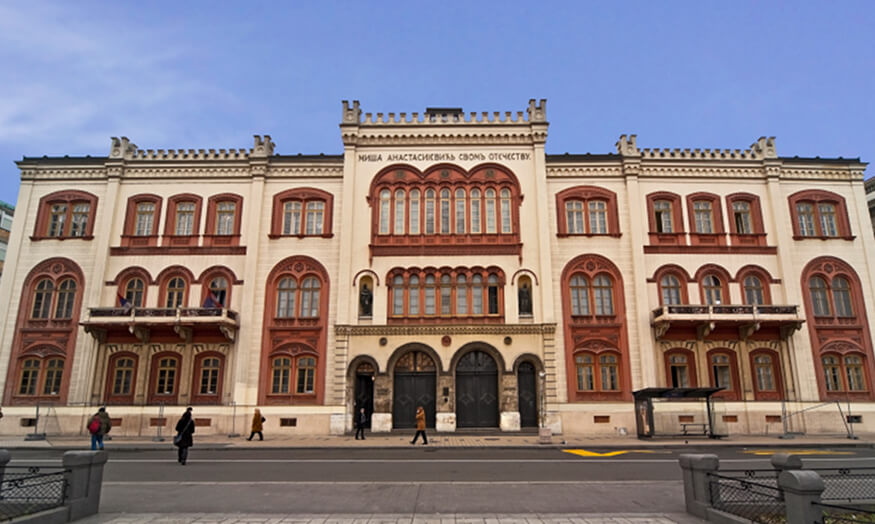

Location: Faculty of Geography, University of Belgrade Studentska 3, 11000 Belgrade, Serbia
This practical, hands-on workshop is designed for researchers who want to integrate generative artificial intelligence into their academic workflow: ethically, efficiently, and with measurable results.
Across two full days of interactive sessions, participants will learn how AI tools can support every stage of the research process: from idea generation and literature review, through data analysis and academic writing.
With guided demonstrations and supervised exercises, each participant will apply advanced AI tools directly to their own topic and will finish the workshop with a draft version of a scientific paper created with AI assistance.
The course will be held in English.
The course will be held in English.
What you will learn
By the end of the workshop, participants will be able to:
Understand generative AI in research
-
- Explain the fundamental concepts of generative AI.
- Identify cutting-edge tools that enhance productivity across research workflows.
Understand generative AI in research
-
- Explain the fundamental concepts of generative AI.
- Identify cutting-edge tools that enhance productivity across research workflows.
Use AI across all research stages
-
- Draft abstracts and introductions with AI support.
- Conduct structured literature reviews and extract key insights.
- Formulate research questions and hypotheses
- Analyze, visualize, and interpret quantitative or qualitative data
Apply AI ethically and responsibly
-
- Understand principles of transparency, academic integrity, and responsible AI use.
- Learn how to critically evaluate and verify AI-generated content.
Workshop outcome
Each participant will leave the workshop with:
Who Should Attend
Researchers, PhD students, early-career academics, lecturers, analysts, and professionals interested in integrating AI into research.
Participation
In-person attendance is limited to 30 participants on a first-come, first-served basis.
After reaching full capacity, remaining participants may join online over Zoom.
Participants must bring their own laptop. Power outlets will be available in the room, and extension cords will be provided.
Workshop Format & Certification
This workshop includes:
Video Access
A recording of the entire workshop will be available for 5 days for all registered participants who are unable to follow the sessions in real time.
Software/Account Requirements
No paid AI tools are required. The workshop will demonstrate methods using both free and paid versions, but participants may attend with free tools only.
Instructor
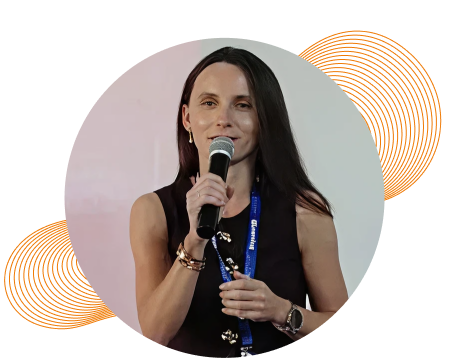
Assoc. Prof. Dijana Oreški, PhD
Dijana Oreški is an associate professor at the University of Zagreb, Faculty of Organization and Informatics (UNIZG FOI). She obtained her PhD from the UNIZG FOI in the field of artificial intelligence (AI).
She is the head of the Laboratory for Data Mining and Intelligent Systems (LOUISE), which is focused on conducting scientific and professional projects related to the application of AI in business and education.
Her research is at the intersection of AI and social sciences, focusing on the application of AI and machine learning to solve social problems.
She is the author and co-author of more than a hundred scientific papers. She has worked on more than 20 international projects related to AI.
In her teaching, she delivers courses related to artificial intelligence, the application of AI in business, machine learning, and intelligent systems.
More detailed description
| Module | Title | Content Description | Learning Outcome |
|---|---|---|---|
| 1 | Introduction to Generative Artificial Intelligence for Researchers | Overview of AI, generative AI and large language models (LLMs). The role of AI in modern science. | Explain the basic concepts of generative AI and identify tools that can enhance research workflows. Discussion: “AI optimism in science”. |
| 2 | Generative AI Tools through the Phases of Scientific Research | Mapping AI tools to research phases: idea generation, literature review, methodology design, data analysis, writing, and dissemination. | Identify relevant AI tools for each phase of the research process. Activity: Create a personal map of AI tools by research stage. |
| 3 | Prompt Engineering for Researchers: Principles and Structures | How to structure prompts: role–goal–task–format. Strategies for academic prompting (critique, summarization, synthesis). | Design effective prompts for academic contexts (e.g., “summarize methodology”, “compare two studies”). Activity: Prompt lab. |
| 4 | AI Tools for Early-Stage Research: Brainstorming Ideas and Literature Review | Practical use of tools such as Hyperwrite, Elicit, Scite, Consensus, Litmaps, and NotebookLM. Automated discovery and summarization of scientific literature. | Use AI tools for finding, analyzing, and summarizing literature; formulate research questions and hypotheses with AI support. |
| 5 | Formulating Research Hypotheses and Designing Studies with AI | Applying generative AI to conceptualize models and methodologies. Using prompts for theoretical grounding and variable operationalization. | Develop a conceptual framework and define hypotheses with AI assistance. Activity: Mini research proposal documenting AI use. |
| 6 | AI in Data Analysis and Interpretation of Results | Overview of tools: ChatGPT Advanced Data Analysis, Julius AI, Excel Copilot. Understanding limitations and responsible use. | Apply AI to analyze, visualize, and interpret data; recognize hallucination and misinterpretation risks. |
| 7 | Academic Writing and Editing with AI Support | Comparison of writing tools (e.g., Writefull, Trinka, Paperpal). Using AI for structuring, summarizing, paraphrasing, and improving research papers. | Apply AI tools for drafting abstracts, introductions, and conclusions. Activity: Create an AI-assisted draft of a research paper. |
| 8 | Ethics, Authorship, and Publisher Policies | Exploring publisher policies (Elsevier, Wiley, Nature) on AI usage, authorship, citation, data protection, and EU AI Act compliance. | Apply ethical principles for responsible AI use in science; write an AI usage disclosure for a research paper. |
| 9 | Communicating and Disseminating Research with AI | Tools: Gamma, SlidesGPT, Canva AI. Creating presentations, visual materials, and audio outputs. | Generate AI-supported research presentations and summaries. Activity: Present an AI-enhanced research output. |
| 10 | Final Mini Project: AI in My Research | Participants apply AI in all phases of research on their chosen topic. | Independently apply AI in personal research and present results, reflecting on limitations and ethical considerations. |
Detailed Attendance Policy
In-person = includes individual feedback
Online = group-level guidance only
Recording = available for 5 days
No lifetime access
Workshop fee:
199 EUR
Attention: the costs of the money transfer are to be covered by the participants. *Workshop fee includes: attendance, certificate, other organizational costs.
Payment Options
Participants may complete their registration fee using any of the following payment methods:
Interbank money transfer (SWIFT)
PayPal
Credit or debit card
Serbian dinar payment (for participants registering from Serbia)
Member Benefits
Premium (Full) Associate Members of the Association of Economists and Managers of the Balkans may attend the workshop free of charge. Regular Associate Members receive a 35% discount on the participation fee.
Membership in UdEkoM Balkans is not a condition for enrolment. All researchers and interested participants are welcome to apply.
For more information, please visit: https://www.udekom-balkans.com/membership
Cancellation / Refund Policy
Refunds are possible up to 7 days before the workshop. After that date, participant substitutions or credit transfer to a future UdEkoM Balkans event is allowed.

AI-Powered Research: From Rough Idea to Paper Draft
Prof. Dijana Oreški, PhD
26–27 February 2026
09:00–16:00 CET